

Admin Admin
- October 22, 2024
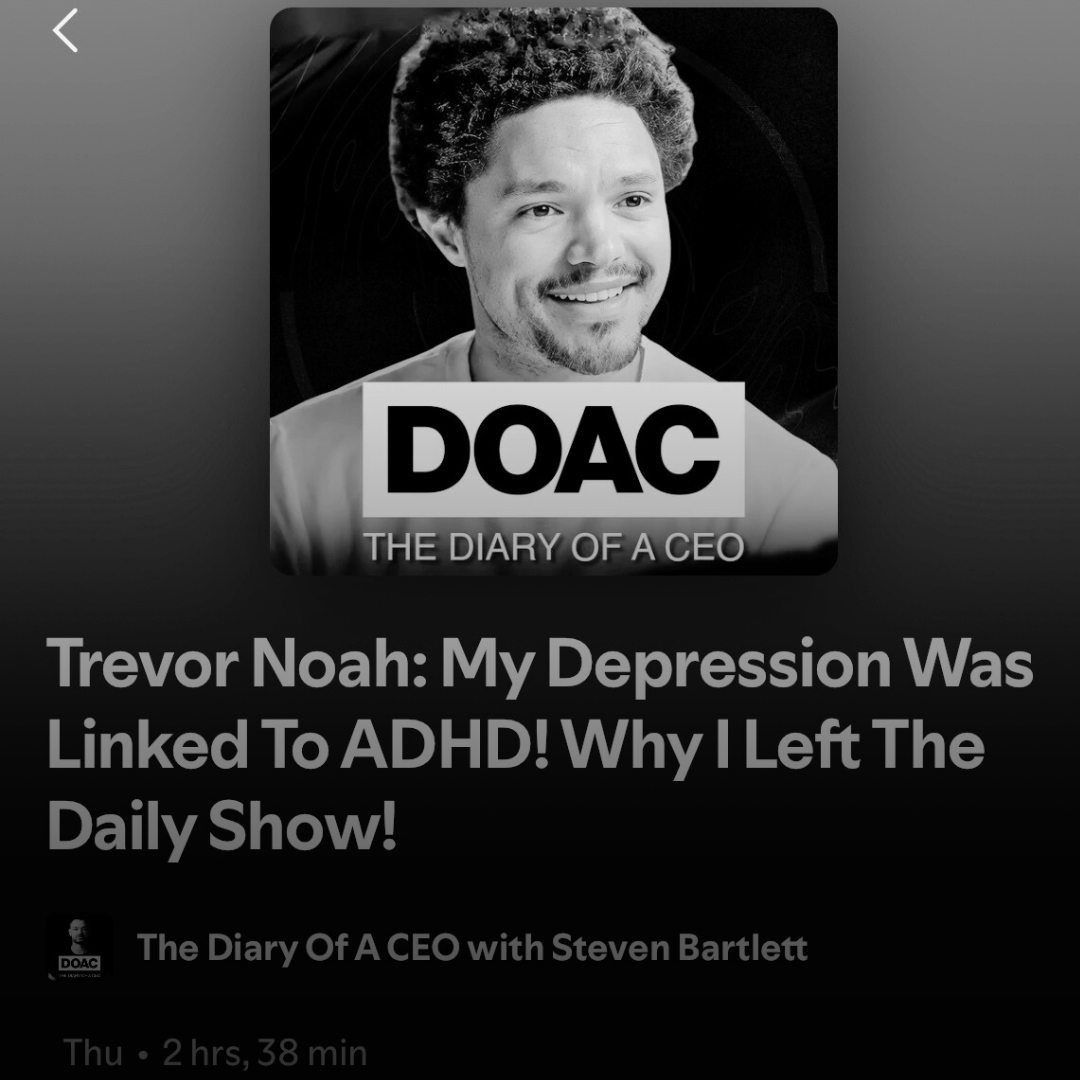
October is both Mental Health Awareness Month in South Africa and ADHD Awareness Month, making it the perfect time to talk about how these issues are connected. Mental health struggles are often difficult to navigate, especially when the underlying cause goes undiagnosed. Recently, comedian and former Daily Show host Trevor Noah opened up about his struggles with depression and how he later learned it was linked to his undiagnosed ADHD. In a conversation with Steven Bartlett on the podcast The Diary of a CEO, Trevor shared how getting an ADHD diagnosis helped him understand why he felt lost and struggled with focus for so long. His story shows how important it is to get a diagnosis when dealing with mental health challenges.
During his interview, Trevor Noah opened up about how his battle with depression often left him feeling lost and unsure of what was next in life. He shared how his focus would either be completely on the wrong things or absent where it mattered most. As he put it, “I would have the inability to choose where to place my focus… So I would either be hyper-focused by something that I shouldn’t, or I would have no focus for the thing that I should.”
These focus issues and emotional ups and downs are typical signs of ADHD but are often overlooked, especially when someone is also dealing with depression. Trevor’s turning point came when a close friend was diagnosed with ADHD. Initially, he didn’t think they had much in common, but over time, Trevor realised he experienced many of the same challenges. This realisation pushed him to seek a diagnosis from a doctor.
The Connection Between ADHD and Depression
ADHD and depression often go hand in hand, but many people don’t connect the two. ADHD can make it difficult for individuals to regulate their emotions, maintain focus, and complete tasks. These struggles can lead to chronic stress, frustration, and feelings of inadequacy. Over time, the emotional toll of unmet expectations and difficulties in school, work, or relationships can contribute to depression.
For Trevor, these ADHD-related challenges manifested as feelings of uncertainty and loss of direction. He found himself either overwhelmed by tasks or unable to focus on important responsibilities, leading to self-doubt and emotional exhaustion. The key to his recovery was recognising that the root of his depression was tied to his untreated ADHD. Once diagnosed, Trevor was able to better understand his mental health and develop strategies to manage both conditions.
Why Getting a Diagnosis Matters
Trevor’s story shows just how important it is to seek a diagnosis when facing mental health issues. Many people go years without knowing they have ADHD, which can make things like school, work, and relationships much harder and increase the risk of developing depression or anxiety.
Getting an accurate diagnosis allows individuals to:
• Understand their symptoms: Recognising that difficulties with focus, organization, and emotional regulation are part of ADHD can be empowering.
• Access effective treatment: Treatments such as medication, behavioral therapy, and lifestyle adjustments can help manage ADHD symptoms and reduce the risk of depression.
• Reduce feelings of isolation: Knowing that ADHD is a neuro-developmental disorder can help individuals feel less alone in their struggles.
For those like Trevor, who’ve experienced undiagnosed ADHD, the path to mental well-being often begins with self-awareness and professional support. His decision to seek help after recognising the symptoms in himself demonstrates how critical a diagnosis can be in breaking the cycle of mental health struggles. By understanding that his depression was deeply connected to untreated ADHD, Trevor was able to find clarity and take steps toward better mental health.
If you want to learn more about ADHD and what it looks like, check out our latest video on YouTube here. And if you feel you need help understanding your personal journey, it’s important to speak with a mental health professional who can provide guidance and support.
Trevor Noah’s experience shows how untreated ADHD can make depression worse, and why getting a diagnosis is so important. Mental health is complex, and understanding the root causes of conditions like depression can lead to more effective treatment and overall well-being. For anyone experiencing similar challenges, Trevor’s story is a powerful reminder that diagnosis and treatment can change the trajectory of their mental health journey.